Bonnet et al. · Cardiovasc Intervent Radiol. 2026
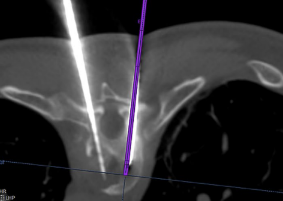
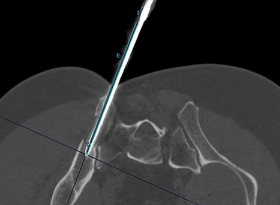
Prospective bone study: ablation, cementoplasty and vertebroplasty*
Accuracy
2.0 mm
mean lateral deviation
Technical success
98.9%
successful needle insertion (89/90)

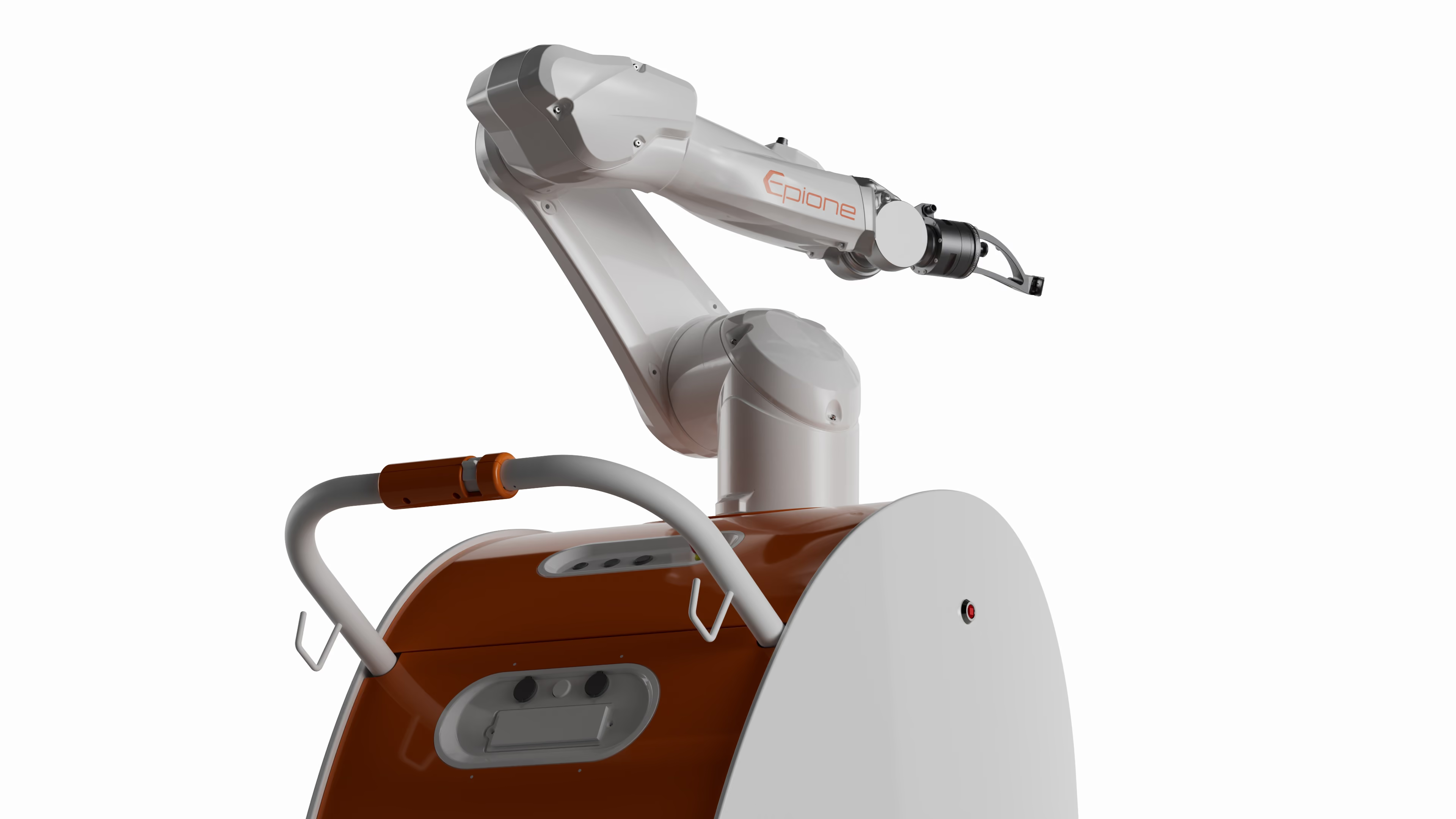
Robotic-assisted IO technology
Epione® assists physicians in planning, targeting and confirming image-guided percutaneous procedures — bringing robotic precision to interventional oncology.
2,000+ patients
treated globally with Epione®
5 modalities
MWA, RFA, CRYO, IRE, ECT
110+ compatible
references for needle and probe instruments
25+
installed base
Design
with 3D ablation zone overlays
and account for real-time patient respiration movement
with precise multi-needle placements and oblique trajectories
while utilizing preferred ablation device (MW/RF/CRYO/IRE/ECT)
with needle placements performed outside the gantry
immediately following the ablation procedure
How it works
Five steps, one platform — designed to fit the rhythm of the interventional suite.
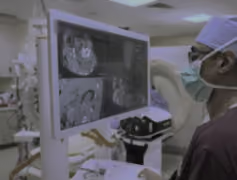
01
The robot is positioned at the CT table alongside the care team.
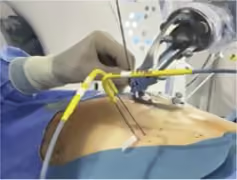
02
Multi-needle and oblique trajectories, with Smart Segmentation.
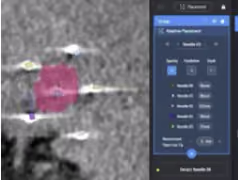
03
The needle guide reaches the planned location, angle and depth.
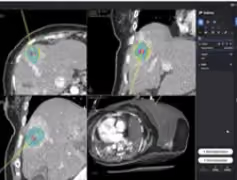
04
The physician inserts the needle and delivers the chosen energy.
05
Pre- and post-ablation image fusion to assess the ablative margin.
Indications
Epione® works with the ablation technology of your choice across three anatomical areas.

CE marked
510(k) cleared
CT-guided percutaneous ablation procedures in the abdomen

CE marked
Lung tumors, including metastatic lesions.

CE marked
Bone tumors and bone consolidation — pelvic osteosynthesis, cementoplasty and vertebroplasty.
Indications and clearances vary by market. Refer to the Instructions for Use for complete indications, contraindications, warnings and precautions.
Key clinical data
Bonnet et al. · Cardiovasc Intervent Radiol. 2026
Accuracy
2.0 mm
mean lateral deviation
Technical success
98.9%
successful needle insertion (89/90)
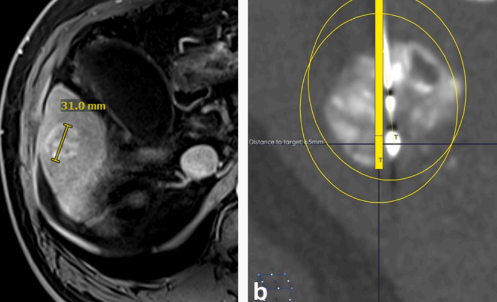
Berman et al. · J Vasc Interv Radiol. 2026
Proficiency
22 cases
to reach the learning curve inflection point for procedure time and 28 cases for placement
Learning curve
43 → 17 min
Single-needle MWA: time reduced over 40 cases. Multi-needle IRE: increased case complexity at constant time (54 cases).


Bonnet et al. · La Radiologica Medica. 2026
Proficiency
94.4%
needle placement success
Safety
2.5 mm
mean 3D accuracy
Resources
FAQ
What are the key benefits of Epione®?
+
Epione® standardizes ablation procedures with an integrated and streamlined workflow. It integrates all the steps of a percutaneous ablation in 4 simple steps: plan, target, deliver and confirm. Epione® is an all-in-one solution designed to: plan and confirm instrument placement with 3D ablation zone overlays; improve instrument placement accuracy and account for real-time patient respiration movement; target challenging tumors with precise multi-needle placements and oblique trajectories; navigate oblique and narrow corridors in the pedicle or in the pelvis with robotic precision; shorten instrument insertion time while utilizing preferred ablation device (MW/RF/CRYO/IRE/ECT) and bone consolidation methods; limit radiation exposure with instrument placements performed outside the gantry; confirm adequate tumor margin coverage immediately following the ablation procedure.
Where is Epione® commercially available?
+
Epione® is commercially available in Europe and in the USA. Epione® device is CE marked for abdomen, chest and musculoskeletal structures indications, and FDA cleared for abdominal ablation indication.1,2
What feedback have Epione® users shared?
+
Please visit the Clinician experiences section of our Resources page for more info.
How does Epione® differ from current percutaneous ablation methods?
+
Although some robotic systems are available on the market, the vast majority of percutaneous ablation procedures are still carried out conventionally today, meaning they are done manually. The conventional workflow includes manual placement of ablation probes based on pre-procedural imaging and incremental CT scans during the procedure to ensure accuracy.
Epione robotic platform allows physicians to overcome limitations from conventional image-guided percutaneous ablation workflow:
• Planning is done in-procedure (instead of pre-procedure), with real-time 3D and 2D visualization
• Probe accurate placement achieved in minutes, within one apnea thanks to robotic precision
• Workflow efficiency & streamlining thanks to Epione’s open architecture allowing to work with any CT scanner and ablation modality
• Radiation exposure may be reduced with reduced overall number of scans
• Learning curve set in weeks to months.
Is it possible to follow an Epione® demo?
+
There are several ways to see the Epione robot in action:
• Attend one of the industry tradeshows such as SIR and CIRSE. Our team and expert spokespersons can show you how Epione works. Find out where we will be next !
• Contact us to request a demo
1. U.S. Food and Drug Administration. 510(k) Summary for Epione. Silver Spring, MD: FDA; 2023. K223758.
2. TÜV Rheinland (August 31, 2021). MDR Ann. IX, Chapt I Certificate (Certificate No. HZ 1551912-1). Quantum Surgical SAS. [https://www.certipedia.com/certificates/HZ+1551912-1].
Get in touch
Talk to our team about clinical workflow, training and installation.